
To mark Rare Disease Day 2026, we are showcasing the successes and leading work of the NIHR Leeds Biomedical Research Centre in delivering research advances for people living with Giant Cell Arteritis (GCA).
GCA, also called temporal arteritis, is a rare condition affecting between one and two people in 10,000. It can cause severe headaches, scalp tenderness, jaw pain, and visual disturbances such as double vision or loss of vision in one or both eyes. If untreated it can lead to blindness or stroke.
The condition is usually treated with long-term steroids, but this can almost quadruple 5-year cardiometabolic risks, leaving patients at risk from both the disease and side effects of treatment.

NIHR Leeds BRC’s GCA research is led by Professor Ann Morgan, Professor of Rheumatology at the University of Leeds, Consultant Rheumatologist at Leeds Teaching Hospitals, and the theme lead for Musculoskeletal Disease with a special interest in GCA and vasculitis.
The research, in collaboration with Dr Mark Iles, Associate Professor at the University of Leeds in genetic epidemiology, aims to develop improved diagnostic tests and therapies, whilst also seeking to reduce costs to patients and the NHS caused by treatment side effects.
Our researchers’ work in these areas was recently recognised at the International Vasculitis Workshop in Melbourne, where they received awards, presented their findings and were interviewed by Vasculitis UK about their work.
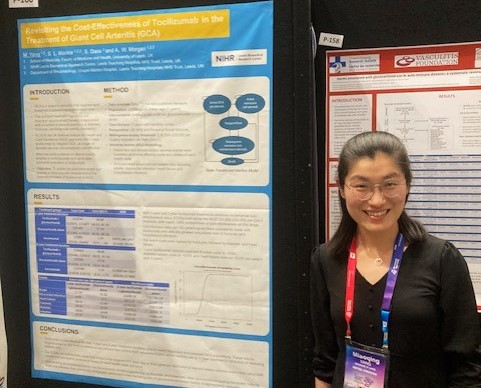
Dr Miao Yang, a Health Economist, presented her ground-breaking work, showing that when the side effects of steroids are included, the immunosuppressant drug tocilizumab becomes cost-effective for all patients with active GCA. This allows a shorter course of steroids to be given, reducing side effects and hospital admissions.
Currently UK GCA patients are limited to 12 months of this treatment in their lifetime and only in certain cases. Expanding access to this treatment could save the NHS money whilst reducing distress and further ill health for patients.
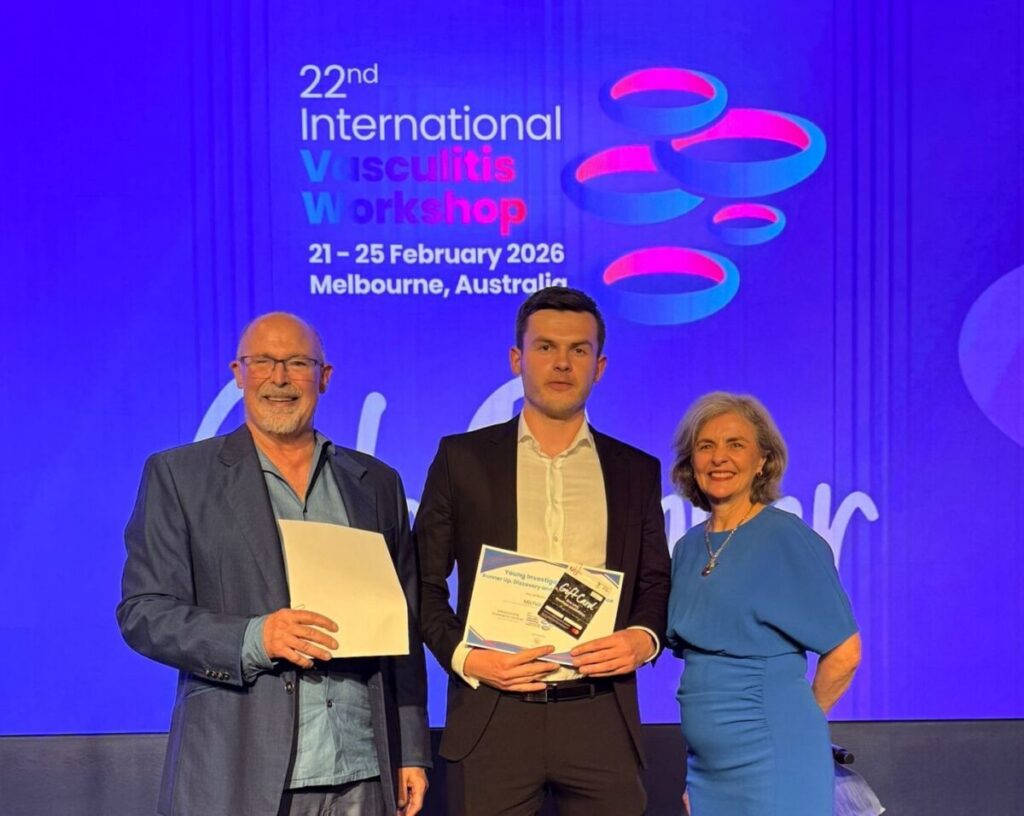
Dr Michal Zulcinski, a post-doctoral researcher, was Runner Up for the Translational Science Award and presented his analysis of steroid treatment effectiveness and biopsy differences in patients requiring tocilizumab.
Dr Zak Thornton, also a post-doctoral researcher, presented his research to the conference highlighting several new immune pathways that contribute to GCA, opening potential new avenues for treatments for patients.
Together, these insights are driving progress in rare disease research, helping to transform GCA treatment approaches and deliver more effective relief from the pain and discomfort caused by the condition.