
NIHR Biomedical Research Centre: Leeds is helping to shape the next generation of clinical researchers by funding a course to give sixth form students from under-represented backgrounds the opportunity to explore clinical and research career opportunities.
Backed by funding and expertise from clinicians and researchers, the initiative aims to broaden access to research and increase participation in research projects in under-represented communities.
The Leeds Pathology Programme was created by clinicians at Leeds Teaching Hospitals to help address inequalities in access to medicine and research careers. NIHR Biomedical Research Centre: Leeds has funded the annual two-day interactive pathology course which allows students to attend for free.
With only around 5% of UK medical school entrants coming from working-class backgrounds, opportunities to explore these careers are often less accessible for these students. Dr Caroline Cartlidge, a Leeds-born histopathology resident doctor at Leeds Teaching Hospitals, developed the programme for local sixth-form students interested in medicine.

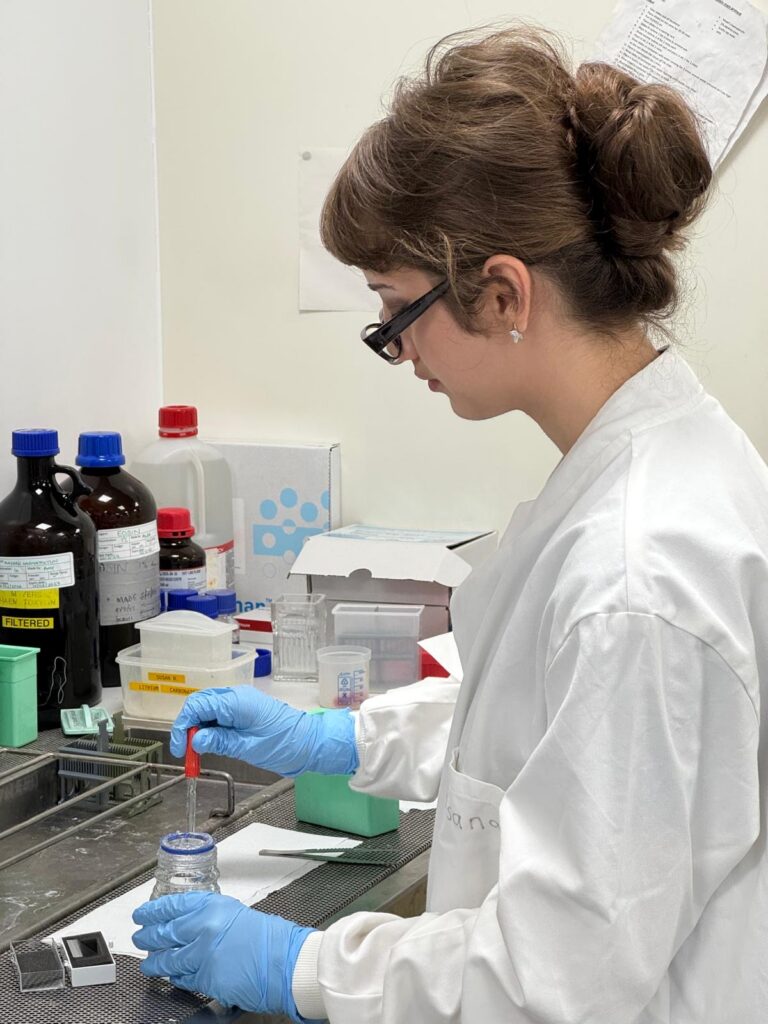
Supported by the BRC’s pathology theme lead, Professor Phil Quirke, the programme was delivered at his laboratory at the University of Leeds, and provided early exposure to pathology, laboratory science and academia, helping students build confidence, raise aspirations and develop a sense of belonging in clinical and research environments. Attendees were given the opportunity to learn about the role of research in patient care, gain insight into Leeds BRC-supported research, and meet a diverse range of clinicians, scientists and medical students whose experiences challenge traditional perceptions of who can pursue these careers.
The programme also placed patients at the heart of the experience through the involvement of patient representatives who offered valuable insights. Students gained a deeper understanding of the real-world impact of research and pathology, connecting laboratory work to the experiences of patients and families awaiting results.
Dr Caroline Cartlidge, commented: “I was the first person in my family to go to medical school so I know how life-changing it can be when someone helps you see the opportunities you never knew existed. This programme offers high-achieving students from underrepresented backgrounds the opportunity to explore careers in pathology, medicine and biomedical research and supports widening participation and research inclusion.
“The workshops also help to boost confidence and aspiration through networking opportunities and in the longer term, it aims to contribute to a more diverse and representative workforce in pathology, medicine and clinical research, helping to reduce inequalities in access to academic and clinical careers.”
The feedback survey indicated that all attendees enjoyed the programme, learnt something new and increased their knowledge about pathology and would recommend it to someone else. 89% of responders indicated an interest in pursuing a pathology career, despite previously not considering it as an option.
One attendee, Roza Abdalla, who is a student at Leeds Sixth Form College, reflected on her experience of the pathology programme:
“One of the most memorable sessions was meeting a patient representative who spoke about her own experiences as a patient and explained the importance of Patient and Public Involvement (PPI). Before today, I had never really considered how much influence patients can have on medical research. This made me realise that communication in medicine is just as important as scientific knowledge, and that listening to patients helps improve research as well as healthcare.
I learnt far more than I expected and realised how varied careers in medicine can be. I found it really inspiring talking with the team as it reminded me that there isn’t just one route into medicine. It also reminded me that every experience can teach valuable skills and made me think differently about my own experiences and how I can use them to show qualities such as communication, resilience and responsibility.
Before today, I mostly associated pathology with post-mortems, but I discovered that this is only one small part of such a broad specialty. There are so many different areas, each playing an important role in diagnosing disease and helping patients receive the correct treatment.
It was interesting to see that the same biological principles I study in class are used every day in real laboratories, just with much more advanced equipment. Biology is directly applied to diagnosing disease and improving patient care. It reminded me that medicine requires precision, patience and responsibility, qualities that every healthcare professional needs.
My day finished with a mock medical school interview, which was one of my favourite parts of the entire programme. I felt much more confident than I expected because many of the discussions over the last two days had already given me examples and ideas to use in my answers! I felt encouraged not to be afraid of talking confidently about my own achievements.”