
Senior representatives from NHS England and Department of Health and Social Care (DHSC) visited Leeds recently to learn how leading research is helping to shape clinical practice and drive improvements in the diagnosis and treatment of serious infections.
Hosted by the NIHR Biomedical Research Centre (BRC):Leeds’ Antimicrobial Resistance (AMR) and Infection Theme, the visit showcased world-leading research and laboratory innovation that is already having an operational impact and could help inform future developments across the NHS.
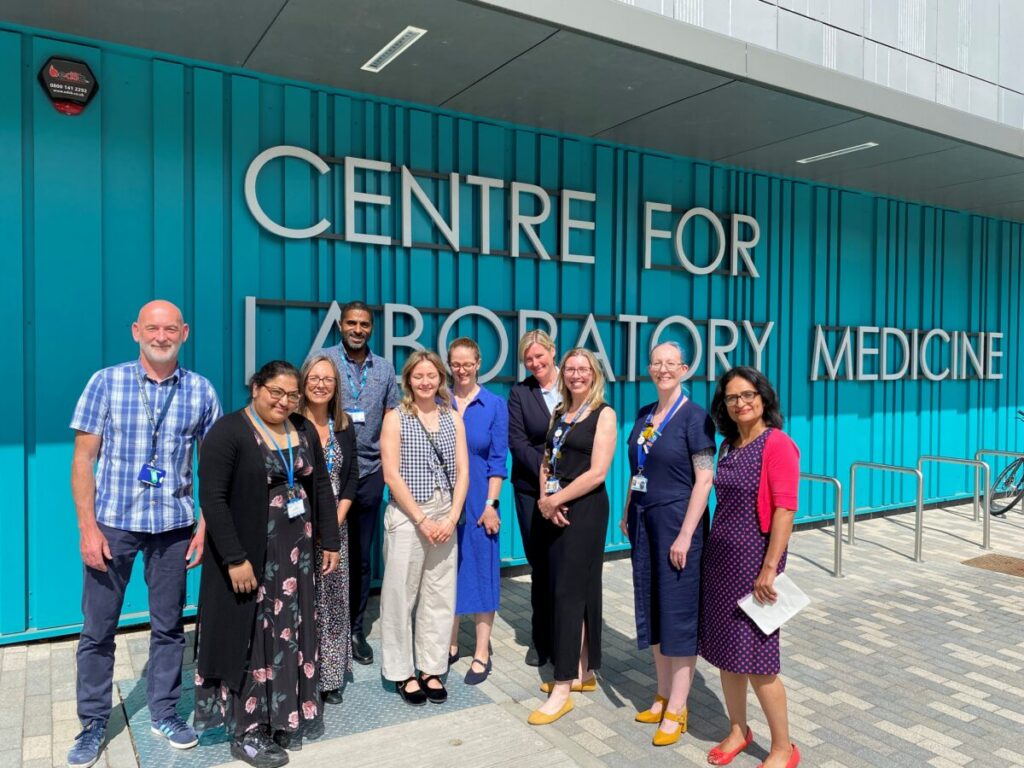
During the visit, NHS England colleagues met with Professor Jane Freeman and Dr Kerrie Davies, MBE, Co-Deputy Theme Leads for AMR to hear about their leading Clostridioides difficile (C. difficile) research, the work of the UKHSA C. difficile Ribotyping Network and the latest innovations in diagnostics. The delegation also had the opportunity to tour the Centre for Laboratory Medicine (CfLM) at Leeds Teaching Hospitals where they met Trust scientists and consultant microbiologist, Dr Kavita Sethi, to see how digitisation and automation are transforming microbiology services in Leeds improving productivity and delivering faster results for clinicians..
NHS England representatives also visited the NIHR Biomedical Research Centre: Leeds AMR and Infection Theme laboratory, where researchers are developing new evidence and approaches to tackle antimicrobial resistance, one of the most significant global health threats.
Experts involved in the visit included Professor Jane Freeman and Dr Kerrie Davies, MBE Co-Deputy Theme Leads alongside colleagues from Leeds Teaching Hospitals NHS Trust, the University of Leeds, UK Health Security Agency and West Yorkshire Integrated Care Board.
Professor Jane Freeman said: “It was a pleasure to welcome colleagues from NHS England to Leeds and demonstrate how research, diagnostics and clinical practice work together to improve better outcomes for patients with serious infections. By bringing together patients, NHS staff, researchers and laboratory scientists, we can ensure innovations are translated into real-world clinical benefits for patients and help shape the future of infection care across the NHS.”
Devon Elliott , National Antimicrobial Resistance Lead at NHS England said “The visit to Leeds Teaching Hospitals NHS Trust shines a light not only on the important role laboratories have in supporting direct patient care, but also across the wider system from Infection, Prevention and Control measures, managing outbreaks, detecting antimicrobial resistance (AMR), as well as realisation of value for money and productivity benefits through infection diagnostics innovation”